To Top
BetMGM Bonus: 50 FREE SPINS. 00:60595857565554535251504948474645444342414039383736353433323130292827262524232221201918171615141312111009080706050403020100 CLAIM NOW

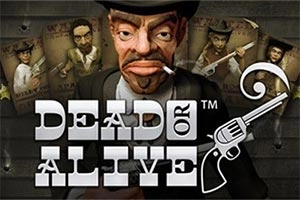
Dead or Alive

RTP 96.82% Pay-Lines 9 Reel Layout 5 Minimum Bet Amount US$ 0.09 Maximum Bet Amount US$ 18
Play For Real
Your opinion matters to us
How enjoyable was you experience?
Please choose your rating
Please recheck your name
Please enter your email
Please choose your location
Excellent!
Glad to hear it. We’re always trying to get better. What can we improve?
0 / 200
Thank you!
Your feedback will help us to improve our website experience.
You have already rated the slot!
Although you have already rated this slot, you can leave a review for other slots.
Written by
Andrew B.
Photo of Andrew B.
Written by Andrew B.

Dead or Alive Online Slot Review

Important for US players: You must be 21+ and in a state where online casino play is legal to wager real money on Dead or Alive. If you or someone you know has a gambling problem, call 1‑800‑GAMBLER or your local helpline. Always gamble responsibly.

Disclosure: Bonus.com is an independent comparison and review site. We may receive commission if you sign up with a casino through links from our pages, but our opinions and ratings are based on our editorial judgment and data, not on partner payments.

Dead or Alive is an online slot from NetEnt that has built a reputation among US players who enjoy high-risk, high-reward gameplay. With a classic layout of 5 reels and 3 rows and a fixed set of 9 paylines, it focuses on tight, straightforward mechanics rather than a cluttered feature list.

The game is rated as high volatility, which means you can expect swings: long stretches of smaller or no returns punctuated by occasional larger hits. Combined with a theoretical return to player (RTP) of 96.82%, Dead or Alive is mathematically closer to serious high-volatility slots than to casual, low-risk games.

For US players used to bonus-heavy modern titles, Dead or Alive feels stripped back but focused. The appeal is less about constant mini-features and more about hunting for those rare, dramatic hits within a relatively simple format.

Graphics & Presentation

Visually, Dead or Alive leans into a classic video-slot aesthetic with clean reels, thematic symbols, and a detailed backdrop that supports the overall setting. Animations are restrained but effective: symbol wins, feature triggers, and big-hit sequences are clearly signposted without overwhelming the screen.

The sound design does a solid job of reinforcing tension, particularly during bonus rounds or near-miss situations. Effects are punchy but not intrusive, so longer sessions do not feel fatiguing. Compared with modern cinematic slots like Tombstone RIP from Nolimit City, which pushes gritty visuals and complex animations to extremes, Dead or Alive is more understated and easier to parse at a glance.

Overall, this is a game where presentation supports the math rather than overshadowing it. If you prefer clarity over constant fireworks, Dead or Alive holds up well even against newer releases.

Overall Review: Is Dead or Alive Right for You?

  • Clean, readable layout with a classic 5x3 grid and fixed 9 paylines.
  • High potential payout up to 12000xx your bet (theoretical).
  • Streamlined feature set that focuses attention on one main bonus round.
  • Well-suited to desktop and mobile play with minimal performance demands.
  • high volatility can be punishing; long stretches without meaningful wins are normal.
  • Base game may feel uneventful compared with modern, feature-heavy slots.
  • Max potential is strong but overshadowed by more recent extreme-volatility titles like Tombstone RIP.

Similar Games to Dead or Alive

If you enjoy Dead or Alive but want alternatives with comparable risk and reward profiles, the following titles are worth considering, subject to availability in your state:

  • Dead or Alive 2 (NetEnt) – A sequel that ramps up visuals and offers three different free-spin modes, including one with extremely high volatility and max wins over 100,000x your bet. Ideal if you like the core concept of Dead or Alive but want more feature variety.
  • Tombstone RIP (Nolimit City) – Notoriously “insane” volatility with variable RTP around 96% and a massive 300,000x max win cap. Great for experienced players who want even more extreme swings and layered mechanics, but far harsher on bankrolls than Dead or Alive.
  • Money Train 4 (Relax Gaming) – A feature-dense bonus-respin slot with about 96.1% RTP, very high volatility, and a focus on building multipliers in a dedicated bonus game. If you enjoy chasing rare but explosive bonuses, this is a logical step sideways.

For players who like the theme of Dead or Alive but prefer smoother gameplay, consider more medium-volatility Western or adventure slots from mainstream providers; these typically trade off peak potential for steadier, more frequent wins.

How to Play Dead or Alive

Basic Setup

Dead or Alive uses 5 reels over 3 rows with 9 fixed paylines (see the in-game paytable for the exact line patterns). You form wins by landing matching symbols along these paylines from left to right, according to the paytable.

  • Set your bet: Choose a stake between US$ 0.09 and US$ 18 per spin (actual limits can vary by casino and state).
  • Spin: Use the main spin button to play one round at your chosen stake.
  • Auto play: If is available in your jurisdiction, you can configure a set number of automatic spins plus stop conditions for wins or losses.
  • Paytable & help: Access the “i” or “paytable” icon for symbol values, win lines, and feature rules before you start.

Bankroll & Session Management

Because Dead or Alive is high volatility, bankroll management matters more than in gentler games. Many experienced players treat it as a high-risk slot and:

  • Keep bet sizes modest relative to their total session budget.
  • Set a loss limit and a time limit for each session.
  • Aim to hit a single strong bonus or line hit rather than grinding indefinitely.

No betting system can change the underlying RNG. Your decisions should focus on how much you are willing to risk and when you choose to stop, not on chasing patterns.

RTP and Variance

The theoretical RTP of Dead or Alive is listed as 96.82%. This percentage describes long-term statistical performance over hundreds of thousands of spins, not what you will get in a short session. Individual sessions can deviate dramatically above or below this figure.

Variance is where Dead or Alive really distinguishes itself. Being classified as high volatility means much of the game’s RTP is concentrated in its bonus features and rare premium-line hits rather than in frequent small base-game wins.

How Dead or Alive Compares to Similar High-Volatility Slots

When you compare Dead or Alive with a few well-known high-risk slots, its profile makes more sense:

  • Dead or Alive 2 (NetEnt): Offers a default RTP around 96.8% and extremely high volatility, with a theoretical max win of 111,111x your bet across its most volatile free spins mode.
  • Money Train 4 (Relax Gaming): Runs at roughly 96.1% RTP with maximum (5/5) volatility, bonus frequencies around 1 in 387 spins, and max win potential that can reach six-figure stake multiples.
  • Tombstone RIP (Nolimit City): Combines an RTP that can be set near 96% with “insane” volatility and one of the industry’s highest max wins at 300,000x your bet, but with a very low hit frequency around 9%.

Against these benchmarks, Dead or Alive typically sits in the same general range for RTP but with a simpler feature set and a lower absolute max-win cap than outliers like Tombstone RIP. In practice, this means you still need to be comfortable with downswings, but the game feels less extreme than the most brutal modern high-volatility titles.

Responsible gambling note: High-volatility slots can feel “cold” for long stretches. Never increase stakes to “catch up” after a losing run; that’s how players can quickly exceed the budget they originally intended to risk.

How to Win on Dead or Alive

You cannot influence the outcome of any spin in Dead or Alive, but you can understand what drives the bigger results and plan accordingly.

Paytable & Symbol Priorities

Wins in Dead or Alive come from lining up the higher-value picture symbols and, especially, any special symbols that act as wilds or scatters. The paytable, accessible from the game menu, will show which symbols pay most and how many you need for a win on 9 paylines.

In general:

  • Lower-tier symbols (often card ranks or simple icons) provide frequent but small wins.
  • Premium symbols deliver rarer but more impactful hits, particularly when they land in full lines.
  • Special symbols (such as wilds and scatters) often hold the key to triggering bonus rounds or enhancing line wins.

Practical Tips

  • Use smaller bets if you want longer sessions to “hunt” for a strong bonus feature.
  • Recognize that many of the game’s biggest outcomes come from the bonus round, not the base game.
  • Decide in advance whether you are content with a medium-sized win or are willing to keep risking for a potential outlier hit.

Compared with something like Money Train 4, which spreads win potential across multiple modifiers and respin mechanics, Dead or Alive tends to concentrate more of its meaningful returns into its main feature and premium symbol lines.

Bonuses & Special Features

The bonus structure in Dead or Alive is comparatively streamlined. The exact feature set depends on casino configuration and is summarized in the game’s info panel as . In most US-facing versions you will typically find:

  • A primary bonus round (often free spins) triggered by scatter symbols.
  • Standard wilds and, in some cases, enhanced wild behavior during the bonus.
  • Occasional multipliers applied to wins in the feature.

The field indicates whether additional bonus-buy or feature-purchase options are supported in your jurisdiction. Many US-regulated sites do not permit bonus buys at all, so expect to trigger features organically.

Compared with heavily feature-stacked games like Tombstone RIP, which offer multiple layered mechanics and bonus-buy options, Dead or Alive feels much more focused: usually one core feature, aimed squarely at high-volatility fans rather than casual bonus collectors.

Top Wins & Payout Potential

The headline number for any high-volatility slot is its maximum theoretical payout. In Dead or Alive, the top advertised prize is 12000xx your total bet. This figure assumes an extremely rare combination of symbols and bonus conditions and is not something regular players should expect to hit.

In context:

  • Dead or Alive 2 advertises max wins of 111,111x in its most volatile free-spins mode.
  • Money Train 4’s bonus mechanics can theoretically reach very high multipliers as well, supported by a dedicated respin bonus game designed for “big win hunting.”
  • Tombstone RIP pushes this to an extreme with a cap set at 300,000x your bet, one of the highest non-jackpot potential payouts online.

Against those, Dead or Alive generally offers solid but not record-breaking maximum exposure. The tradeoff is that its math model is somewhat less “all-or-nothing” than the most extreme modern games, although it still belongs firmly in the high-risk category.

Disclaimer: Max-win outcomes are astronomically rare and exist primarily to define the theoretical ceiling of the math model. They are not a realistic expectation and should not form the basis of your bankroll decisions.

Free Spins in Dead or Alive

For many players, the most exciting moment in Dead or Alive is triggering its free-spins style feature. While specific mechanics may vary across configurations, the overall pattern is typical of high-volatility slots:

  • A certain number of scatter symbols triggers a set of free spins.
  • During these spins, wilds may become more powerful (for example, sticking in place or carrying multipliers).
  • Payouts during the feature tend to be far higher, on average, than in the base game.

Some versions of the game may allow free spins to be retriggered or extended when additional scatters or special wilds land. Again, consult the in-game rules at your chosen casino for the exact structure.

Compared with newer titles like Dead or Alive 2, which offers multiple distinct free-spin modes with different risk profiles, Dead or Alive usually focuses on a single primary bonus that either delivers or doesn’t on any given trigger.

Mobile Experience

Dead or Alive is fully optimized for modern mobile browsers, with support for Desktop, Mobile. The interface automatically adapts to portrait and landscape modes, and controls are consolidated for touch input.

In testing across typical US mobile devices, the game loads quickly, and spin animations remain smooth on stable Wi‑Fi or 5G connections. Because Dead or Alive relies on clear symbols and limited on-screen clutter, it arguably plays better on phone-sized screens than many newer, busier slots.

Whether you prefer to play from a regulated online casino app or directly in your mobile browser, Dead or Alive is technically straightforward and does not demand cutting-edge hardware.

Why You Should Play Free First

Given its high volatility profile, Dead or Alive is best approached cautiously—especially if you’re new to higher-risk slots. Playing in free-demo mode first is an excellent way to:

  • Understand how often the bonus seems to trigger over a longer stretch of spins.
  • See how quickly a bankroll can fluctuate at different bet sizes.
  • Decide whether you enjoy the pacing and swinginess of the game before risking real money.

Many US-facing casinos and social/sweepstakes-style sites provide a free play or “practice” version of similar games. Using these modes lets you test your comfort with variance and stake sizing in a risk-free environment.

YMYL note: Treat demo sessions as a tool to understand risk, not as a guarantee of what will happen with real-money play. Outcomes in gambling are random; no amount of practice will make a future bonus or big win “due.”

Our 150-Spin Test Session (Illustrative)

To get a feel for how Dead or Alive behaves in practice, our review team ran sample sessions of around 150 spins at a moderate bet size. These mini-tests are not statistically meaningful, but they do give a sense of pacing.

Across runs, we observed patterns typical of high volatility slots:

  • Extended stretches of small or no returns.
  • Occasional mid-sized line hits that partially refilled the balance.
  • One or two bonus triggers that dominated the overall result of the session.

In some 150-spin sequences, a single strong bonus round brought the session back close to even or slightly ahead; in others, repeated small or mediocre features left us significantly below starting balance. This variability is exactly what high-volatility math is designed to produce.

Important: Your experience over 150 spins (or any fixed number) will be entirely random. Do not treat this description as a prediction; it is merely a qualitative snapshot of how the game can feel to play.

Latest Game Stats for Dead or Alive

Key technical details for Dead or Alive (values may vary slightly between casinos and jurisdictions; always confirm in the in-game help where you play):

  • Game: Dead or Alive
  • Provider: NetEnt
  • Release date: 2009
  • Reels: 5
  • Rows: 3
  • Paylines: 9
  • RTP: 96.82%
  • Volatility: high
  • Minimum bet: US$ 0.09
  • Maximum bet: US$ 18
  • Maximum payout: 12000xx total bet
  • Jackpot type:
  • Bonus rounds available:
  • Megaways layout:
  • Auto play support:

Note: Operators can sometimes configure different RTP profiles. In regulated US markets, always check the game’s information screen at your chosen casino for the active payout setting.

From a technical and experiential standpoint, Dead or Alive is a focused, high-volatility slot that appeals primarily to players who:

  • Are comfortable with long dry spells in exchange for the chance at rare but significant hits.
  • Prefer straightforward mechanics over a long list of layered features.
  • Value clear graphics and simple controls for longer sessions.

Compared with sequels and contemporaries, Dead or Alive occupies an interesting middle ground. It is more straightforward and arguably more transparent than many modern “everything and the kitchen sink” slots, but also less spectacular on paper than the newest extreme-volatility releases. If you appreciate classic, highly volatile math with a single, high-stakes bonus round, it remains a compelling option—provided you manage your risk carefully.

Community feedback on Dead or Alive is typically polarized, which is common for high volatility slots. Players who enjoy high-risk games often praise its focused bonus round and big-win potential, while others criticize the long dry spells and sparse base-game action.

On Bonus.com and partner platforms, Dead or Alive currently holds an average user rating of 4.8 / 5 based on reviews. Many positive comments highlight memorable big wins landed during the feature, while negative reviews tend to come from sessions where the bonus never appeared or underperformed.

Remember: User experiences are anecdotal and heavily influenced by short-term variance. A handful of great or terrible sessions says little about the long-term math. Treat reviews as qualitative impressions of pacing and enjoyment, not as evidence that the game is “hot” or “cold.”

If you decide to try Dead or Alive, do so with a clear budget, realistic expectations, and a focus on entertainment value. That mindset—combined with regulated US operators and responsible gambling tools—is the best way to approach any high-volatility online slot.
Player FAQs

The theoretical RTP of Dead or Alive is 96.82%, based on the standard configuration from NetEnt. This is a long-term average; individual sessions can land far above or below this value. Always confirm the active RTP in the game info panel at your chosen casino.

Yes. Dead or Alive is classified as high volatility, meaning wins can be less frequent but potentially much larger, especially during the main bonus feature. This style of math is best suited to players who can tolerate swings and stick to a pre-set budget.

Many legal US online casinos offer a demo or “practice” version of Dead or Alive where you can spin with virtual credits. Social and sweepstakes-style sites may also host similar games for free play. Use these modes to learn the rules and pacing before risking real money.

Yes, but only when playing at a licensed real-money online casino in a state where such gambling is legal and regulated. Any real winnings are subject to the casino’s terms and US tax rules. Never treat gambling as a way to solve financial problems.